
Genome Evolution of Structural Variants
Structural variants (SVs) are large (>50 bp) mutations, e.g., deletions, insertions, and inversions, that more likely change phenotypes than single nucleotide variants (SNVs) and, thus, are subject to natural selection and important in evolution. Long-read sequencing is used to to resolve complex SVs, apply phylogenetic and population genetic methods to infer their evolutionary histories, and design statistical models to determine their functional significance in organisms.
Selected Publications:
Adaptive SV Introgression in Humans
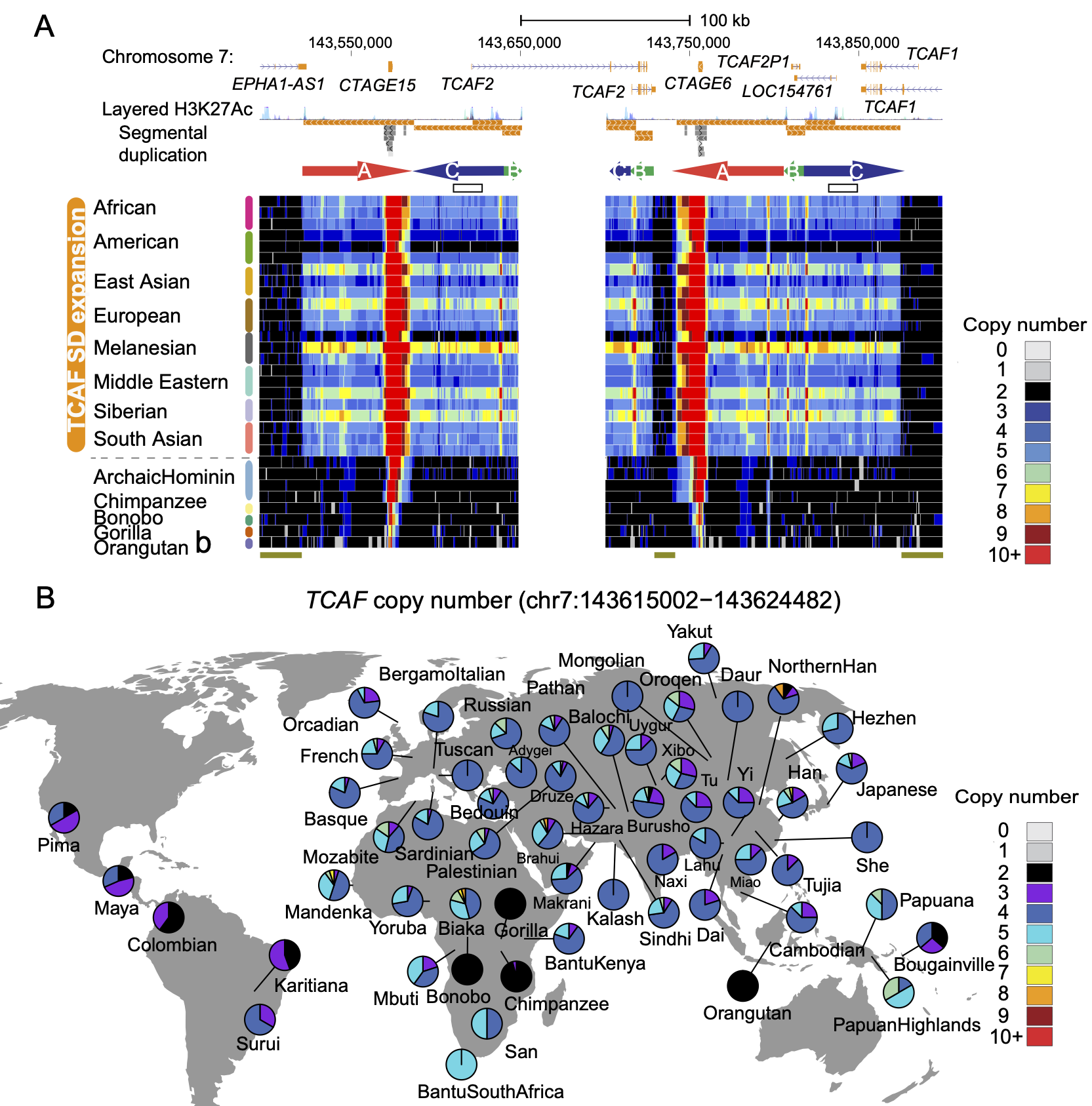
Learning Evolution using Statistical Modeling
DNA variation data record useful information about the evolution of organisms. Our lab designs and applies quantitative and statistical methods to reconstruct the evolutionary history in human and nonhuman primates, as well as other organisms. Understanding evolution is a critical step towards understanding the biological world that we live in and helps us to understand the past and predict the future.
Selected Publications:

Delineating Genome Diversity and Evolution using Long-Read Sequencing
With the recent development of long-read sequencing, we have the ability to assemble diploid genomes and study complex genomic regions for the first time, 20 years after the first draft of the human genome. As part of efforts from the Human Genome Structural Variation and Human Pangenome Reference Consortia, our lab leverages these resources to better capture the genetic diversity of our species, particularly in complex genomic regions that short-read sequencing cannot adequately resolve.
Selected Publications:
Adaptive SV Introgression in Humans

Evolutionary Medicine
Evolution is critical for understanding human health, including how populations adapt to different environmental niches and pathogens, as well as the genetic basis of disease predisposition.
- Using population genetics methods, we identified genetic variants that may affect bone and muscle development in African Pygmy populations. We also found variants involved in fat metabolism that could contribute to cold adaptation in Siberian hunter–gatherers (Figure A)
- In a large cohort of autism families, we demonstrated that ultra-rare likely gene-disruptive (LGD) variants in probands arose more recently than the same type of variants in siblings. Many of these variants are under strong purifying selection and affect a distinct set of genes not yet associated with autism (Figure B).
Selected Publications:
Evolutionary Medicine - Autism